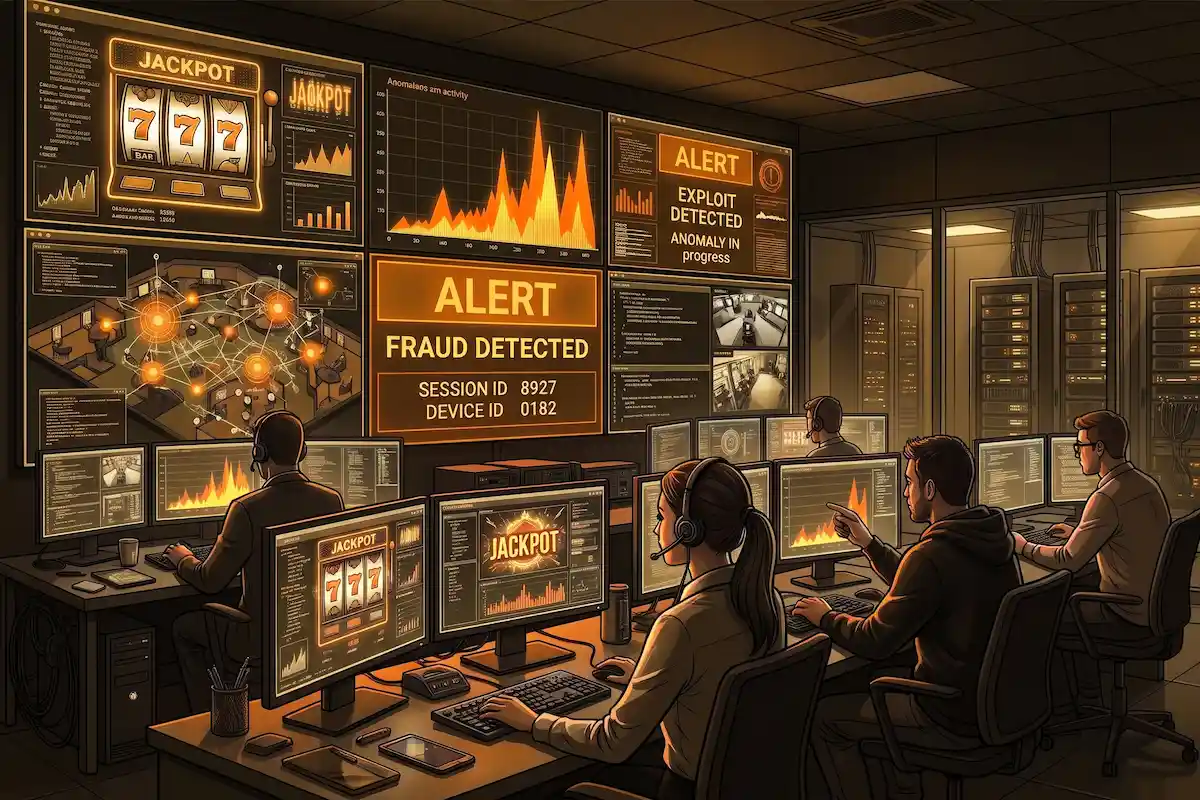
Fraudsters target games that seem faulty, and they know what they’re looking for.
Fraudsters in the online gambling world can be very tech-savvy. So much so that I’ve seen firsthand cases of exploitation of brand-new, proprietary games from platforms that didn’t have any marketing campaigns yet.
The back office is the heart of any casino, and sweepstakes operations are no different.
However, reading data and interpreting it can be complex for an executive with only real-money iGaming experience.
The alternative coin system causes players to bet differently depending on the type of currency involved, redeemable and not redeemable as cash.
Moreover, platforms must work perfectly to filter data correctly.
Game proficiency is also very important: financial fraud detection teams must understand the difference between an obscure, brand-new proprietary slot game and a market leader.
Exploitations of very famous games created by market-leading studios hardly ever cause problems, and when they do, the GSP usually gets in touch before the operator detects the problem.
How to Spot a Fraud and A Faulty Game
Initial signs of problems are easy to spot. If a game suddenly starts being played a lot more than it used to without specific promotion, such as placing it on the home page of the casino, that can be a sign of problems about to happen.
If suddenly, the redemption requests spike abnormally, the financial fraud prevention teams need to open the back office and review game sessions.
If many players start profiting from the same game out of the blue, chances are there’s a faulty game being exploited.
There are communities dedicated to detecting these faults and exploiting them in cooperation, which can cause big liabilities if withdrawals are approved without understanding that something is off and the casino is basically being robbed.
Moreover, understanding whether a player is interacting with several slots is important because that indicates a dilution of risk across different game types and potentially legitimate gameplay.
An example of a Sweepstakes Slot Exploitation Smoking Gun
A typical scenario of news spreading among players that a game is paying abnormally due to natural technical failures in the RNGs or an actual hacking attack will involve factors like:
- A new player registers and deposits large amounts of money;
- The new player obtains the redeemable coin as fast as possible;
- Sequential bets are placed on a single slot;
- The slot is paying a high percentage of winning rounds.
Factors that can contribute to fast risk mitigation include teams that are proficient in the world of gaming.
A great financial fraud prevention manager with strong contacts in the financial industry and deep knowledge of PSPs is not a complete leader if he or she doesn’t know the basics about the operator’s or platform’s game portfolio.
As mentioned, a faulty in-house game is a very different problem than one provided by a market-leading supplier.
If a faulty game is spotted and technical teams lose time trying to understand basic questions such as:
- What is the game’s GSP;
- How to disable a game;
- How to contact the GSP (ticket, Slack, or other form of contact);
- Who’s in charge of emergency situations and choices of game replacement;
Chances are, more time than necessary will pass, and the liabilities derived from the faulty game can grow exponentially.
A good operator must be a well-oiled machine with near-polymath team members who blend technical expertise, financial literacy, and industry game content knowledge.
Of course, each team member has key responsibilities and knowledge, but learning the basics of the other areas is crucial to prevent disastrous scenarios when your shop is live 24/7, like an online sweepstakes casino.
Leave a Reply