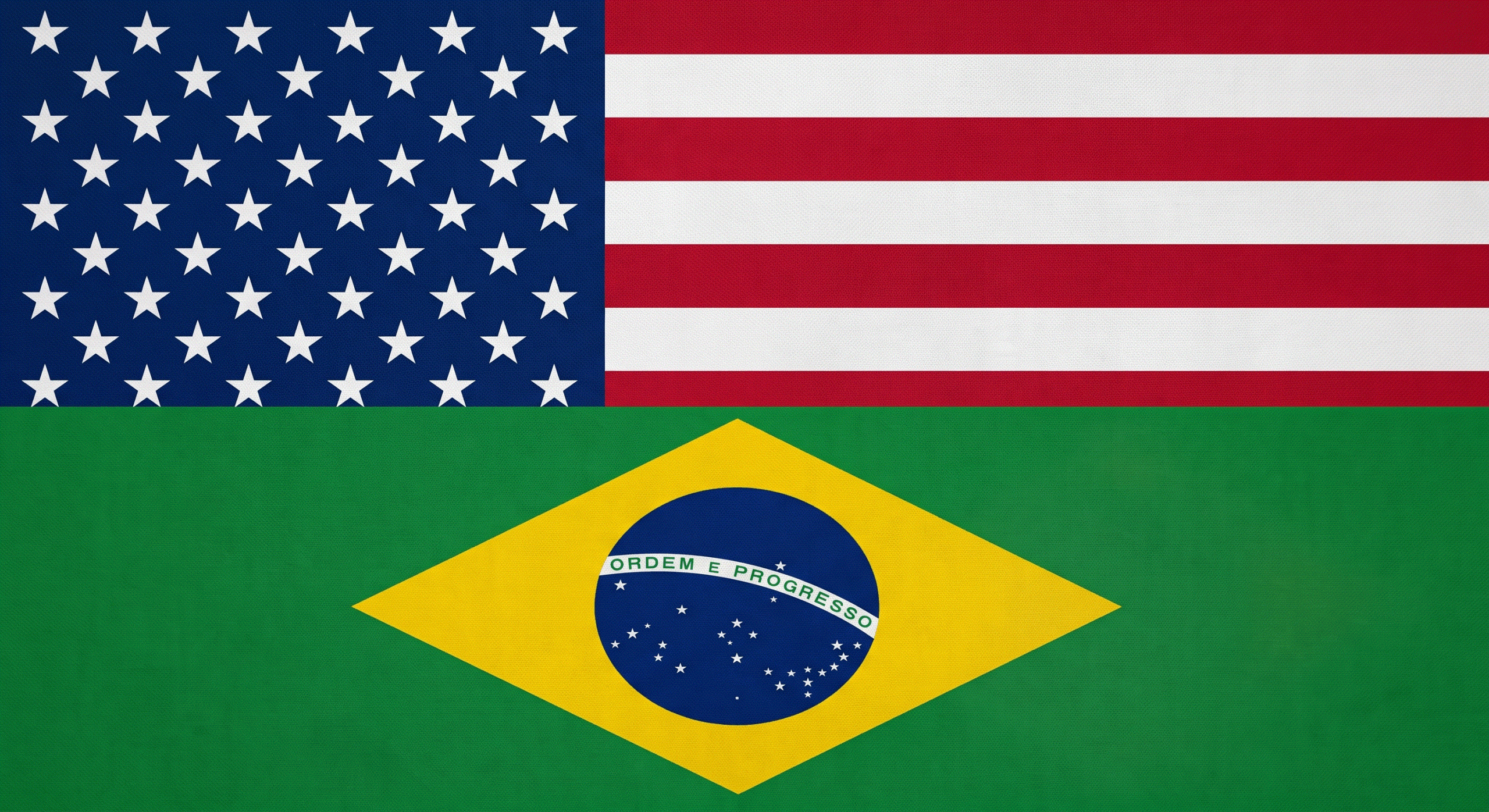
Sweepstakes or Not? Understanding Brazil’s Familhão
Brazil has a very peculiar product. Working under regulations much closer to consumer goods retailers, and insurances than gambling. But it pays a 200K monthly prize and focuses the Marketing around it.
Imagine a product that aggressively markets its 1 million prize (local currency, BRL). Equivalent to USD ~=200K. One of Brazil’s most popular TV hosts, broadcasting it in a TV show as a product. Take a look at some facts regarding this product:
- The Marketing is centered around a monthly prize of BRL 1MM (~=USD 200K). While they’ve recently focused more on the fact that it isn’t technically a lottery, their client base was aggressively built upon this premise.
- Technically free of charge, much like the American sweepstakes Market where a “form of free entry” must be presented to the player;
- Doesn’t work under lottery laws, therefore, not requiring a lottery license;
- Doesn’t work under the recent gaming regulation (sports betting and online casino)
The Catch: Familhão is a club of coupon discounts with a free prize
This post is far from a legal opinion, it is just a personal reflection considering what I’ve seen in The United States in the last 3 years in the sweepstakes Market.
After analysing the historically flashy marketing of Familhão, this became evident to me a long time ago. So let’s breakdown how the system works:
- Potential clients are offered a membership to a coupon club. The monthly fee can be fully redeemed online through retail partners, as a discount to a product worth more than BRL 20 or a low ticket product’s full price.
- The club costs a monthly fee of BRL 20 (~= USD 4.00) per month. It is fully redeemable in the program store (bear in mind that the BRL is a weak currency and this can be redeemed for small consumer goods of relatively good value for low-income families, who are the vast majority of viewers of the Sunday mainstream TV show that promotes it.
- Active members of the “club” can win a prize of BRL 1MM (~=USD 200K) every month.
The problem: The Marketing has always been 99% focused on the cash prize
The economics of the product are very interesting. Let’s take a look at some facts and figures:
- TV Globo in Brazil has an impressive Market share of 30%-ish of the Brazilian audience;
- Familhão is promoted on Luciano Huck’s program on Sunday afternoons, and that this TV show is viewed by tens of millions of Brazilians;
- The TV host is so popular that he has been considered a viable candidate for the Brazilian presidency in past elections. There are some biographical similarities between him and Trump in this sense: both are deeply camera-savvy people with significant personal net worth and a lot of fans across their home countries.
Recent Marketing Changes of Familhão
When I started the first draft of this article, I considered that the product was fully focused on the cash prize.
However, the real money iGaming industry in Brazil is under attack as a ‘public enemy’ around the Brazilian general elections that are about to happen next month.
Therefore, it looks like the TV Show promoting Familhão decided to work a little bit to ‘detach’ themselves from the licensed real money iGaming operations.
However, I believe that this doesn’t change the reality that the product was aggressively built upon a marketing premise that what mattered there was the delivery of the big cash prize of ~USD 200K.
The PR intricacies as well as the marketing adjustments that happened tell you a very interesting story of what is going on in Brazil across multiple verticals of the gaming industry.
My take is that Brazil’s Familhão is indeed, a very peculiar form of sweepstakes, much similar to situations when American retailers organized sweepstakes and free giveaways to customers, which is something that isn’t a new phenomenon at all, and has been around at least since the 1960s.
If they market themselves a coupon club or store and reward potential customers with cash prizes, the natural conclusion is that they’re trying to sell themselves as a product much close to, for example, a furniture shop that gives away in a sweepstakes a couch for any customer spending USD 100 or more in a specific period of time.
Sweepstakes is a fascinating umbrella term that allows us to analyse a lot of products globally to understand whether they qualify as a sweepstakes product or not.
Stay tuned for more global analyses of products, within and beyond the U.S.
Leave a Reply