-
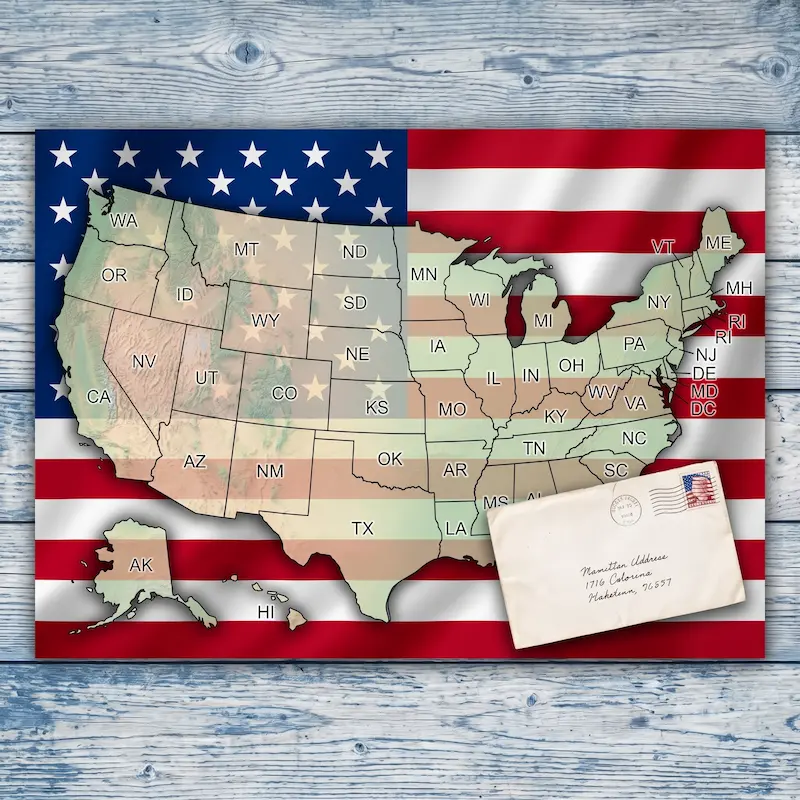
Why People Send Physical Letters to Sweepstakes Casinos
People send physical letters to sweepstakes casinos to collect free virtual coins (Sweeps Coins) through a legally required process called the Alternative Method of Entry (AMOE). To comply with U.S. sweepstakes laws, operators must provide a no-purchase entry method that lets players request free, cash-redeemable credits by mail without spending money.
Some online casinos have online forms to comply with AMOE requirements, but they are far less common than the shockingly old-fashioned physical letter sent via the U.S. Postal Service.
Naturally, some people try to exploit the system with bots and AI, which helps explain why online forms are less common.
The fact that the credits provided are usually in the range of USD 5 worth of credit using the alternative gaming coin systems has even created a subculture of fans that calculate the ROI of mailing these requests.
For example, if a player calculates that the total cost of mailing a request to a specific casino costs $1 (including everything, paper, envelope, postal services), and the estimated monetary value of the credit provided is $5, the theoretical ROI is a substantial 400%.
Is Mailing a Sweepstakes Casino a Real Investment?
The problems with that notion are evident to anyone with a minimum knowledge of casinos, accounting, and econometrics.
If the credits provided were directly redeemable in cash or gift cards, then yes, the ROI would be substantial.
If someone could be bothered to get a lot of people to do it, and organize the collection of those profits, it would still take a lot of work for a few bucks that any hot job in America would probably pay more.
But the credits normally have to be used in the casino, and the player then would be exposed to another layer of friction, which is actually knowing which games present low volatility, to then maybe have money to withdraw in the form of gift cards or cash withdrawals where it is legal in America to do so in a sweepstakes casino.
So the reality is that it is not only impractical, but also time-consuming and not a problem for the sweepstakes business model.
Moreover, game RTPs in sweepstakes casinos can be lower than at real-money operators, and the actual figures are usually a closely guarded secret.
How RTPs Actually Work in Sweepstakes Casinos (And Real-Money!)
Casino fans don’t know this, but operators usually choose the RTP from a selected set of options provided by the GSP. So games can literally pay more depending on the casino, even if it is the same slot!
How RTPs Work in Land-Based Casinos Like in Vegas
This is as unknown to many casino fans as the fact that legislation stipulates how different physical slots can be in terms of RTP depending on their location on a casino floor. Slots in higher-traffic areas pay slightly higher RTPs to entice players to use machines in less crowded areas, where their fortunes won’t be as high.
We’re talking about 2% differences, not major, but still, the intricacies of casino regulations and industry practices that are well-defined by rigorous mathematical models and RNGs, as well as certification of physical and virtual machines, surely are beyond the knowledge of the usual casino fan.
So the illusion of making big bucks by mailing a pretty please to a sweeps operator is more of a hobby than a reliable way to bleed operators’ margins.
In fact, the whole subculture and the players act as a way to promote the sweeps casinos themselves.
Beyond the physical “pretty please,” if you will, people actually actively ask for freebies when contacting the CS of sweeps casinos.
Some real-money execs might be surprised by how often operators say yes and credit tokens to their accounts. Usually, the casino won’t be stupid enough to credit the internal currency that allows direct withdrawals as gift cards or cash withdrawals, but mistakes can happen.
By answering yes to these requests, even beyond the official physical letter programs, sweeps casinos can document this and claim that they really go a step further when it comes to AMOE compliance.
-

Sweepstakes-Compliant Dictionary: The Key to A Compliant Sweeps Operator
Understanding how Compliance Affects B2C Content in the American Sweepstakes Market
Real Money operators and execs often feel surprised when first introduced to this concept, especially in the U.S. Forbidden words of sweepstakes are no joke. The vertical relies heavily on legal opinions, and the intricacies of each American state dictate that some words are compliance mortal sins.
The first example that comes to mind is the word “bet.” It’s simply forbidden. The usual substitution is “play.” That also applies to customers, who are usually referred to as players, clients, or customers, but absolutely never “bettors.”
The way to stay compliant is to refer to a document called the Sweepstakes-Compliant Dictionary.
Each company, whether an operator or a platform, normally adopts an official substitution of potentially non-compliant terms for previously approved alternatives.
It’s simply impossible to keep a close track of the imagination of each team member and approve on a case-by-case basis every potential alternative to forbidden terms.
References to fiat currency, for example, become references to FC and SC, alternative credit terms that legally aren’t money.
The best alternative, operationally, is simply to circulate a dictionary, usually in the form of an Excel or Google Sheet document, that everyone can refer to. This way, there’s no excuse for team members of operators and platforms that produce customer-facing content to include forbidden terms.
Supplier Content and Compliant Lexicon Within Sweepstakes Operations
Sometimes, the biggest challenge, however, is to control content that comes from suppliers. GSPs have their own systems to substitute references to fiat currencies like USD or EUR in their games, and a platform or operator must trust the efficiency of the GSP.
If, for example, a slot displays a reference to Euros or Dollars within the game environment, the platform or operator needs to simply disable the game and immediately call the GSP.
The problem with that kind of situation is that GSPs have different approaches to situations like that. Some of the B2B support will be limited to business hours depending on the query, and disabling, for example, a game that is featured on an operator’s home page requires a technical choice that isn’t always easy.
Games featured on the home page usually come along with special commercial conditions like GSP discounts, or worse, maybe the operator is a shareholder of the GSP itself!
I’ve seen this situation firsthand. The sequence of things that happen when a game is faulty, not only within sweepstakes compliance issues, but others, is a situation that requires a clear protocol.
Also, sometimes the best GSP partners show their worth based on how easy it is to fix situations like this. Sometimes a discount in prices may hide poor contingency protocols on the GSP side.
The trade-offs when choosing suppliers are indeed very intricate and require firsthand experience with different suppliers from different geos.
But before even analyzing the potential issues derived from third-party suppliers, operators and platforms must do the internal homework and make sure that their own teams do not generate compliance and technical problems.
Running an online sweepstakes operation surely isn’t for the faint of heart, as the usual iGaming challenges come with the added layers of compliance, like the lexicon used in B2C environments. Additionally, doing all that within the highly litigation-prone environment of America really makes a combo that requires major efficiency across teams, operators, platforms, and suppliers to run profitable operations smoothly.
-
Albumza Case Study: Sweepstakes in California and NY?
The world of sweepstakes is a rich source of cases to study. Legal opinions that allow operators to go live in the rich American market can generate substantial profits.
And also a lot of legal problems!
America certainly is extremely unique in terms of how legal intricacies work. Foreign companies and executives trying their luck in America must be very attentive to how things work. I’m not just talking about the “lawyer up” culture, which extends to how easily AGs and state AGs might sue non-compliant companies.
Everything needs to be well-documented, not to mention the rigor of tax law. Even if an operator finds a legal loophole to operate in a gray American market, poor attention to bookkeeping and how salaries are paid to employees based in America can also generate a lot of issues.
And how about “highly original” legal opinions? Albumza surely tried a new way of doing business.
Essentially, the operator claims to be a platform that sells digital collectibles. All the sweepstakes casino-like products are technically a secondary consequence of said “e-commerce” activity.
It’s very interesting to notice how some affiliates claim that Albumza is the only active sweepstakes operator in California and New York, but the operator itself calls it anything but.
Mature real-money markets also come with strict regulations for affiliates themselves. So the “iteration” of being an affiliate to a brand-new “interpretation” of a potential way to operate in the extremely rich markets of California and New York certainly represents things that AGs need to “catch up with.”
For now, Albumza is live with a very particular business model focused on low tickets, a lot of friction, extremely limited email CS, and affiliates claiming things that, in my opinion, are very dangerous to the operator itself.
More to follow on the subject!
-
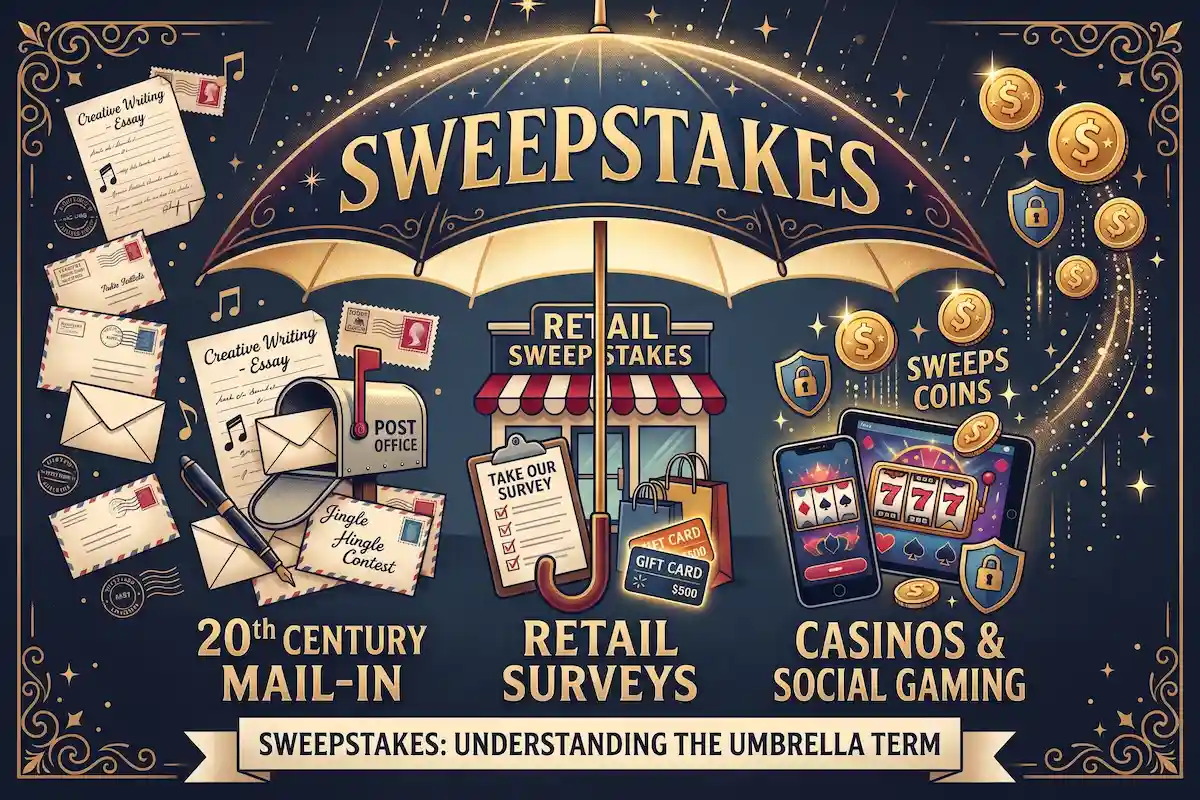
Sweepstakes: The Umbrella Term That Defines Why The Vertical Is Viable
Sweepstakes is not a new term. Unlike ‘Prediction Markets’ which can be considered a new element of the gaming industry jargon, the term has been around for a while in English languages. And the U.S. is by no means an exception.
An Example of A Sweepstake Completely Unrelated To The Gambling Industry
Two giants of the retail world in America are famous for their sweepstakes. Walmart and The Home Depot run quarterly sweepstakes to assess the quality of their services.
Winners can earn gift cards worth anywhere from three to four figures.
While I have a friend who is a customer service specialist who says that “no survey should be incentivized with money at the risk of biasing results,” whether these retail giants do it to please their customers or actually try to collect intel, these sweepstakes aren’t at all comparable to a sweepstakes casino.
Creative Writing Sweepstakes in The 20th Century in America
In the 20th century, America lived the golden age of ‘Creative Writing Sweepstakes’. That stemmed from evolving laws that, at the time, didn’t allow retailers or other companies promoting goods and services to present the sweepstakes as games of chance.
Requiring some sort of creative work—such as essays, poems, jingles, songs, drawings, and other forms of artistic expression—allowed retailers to remain compliant.
Interestingly, the law eventually changed, allowing retailers to run promotions based on a key component of the sweepstakes world: an Alternate Method of Entry (AMOE), which in today’s sweepstakes casinos translates most commonly as “freebies” given to users.
A Term That Changed Heavily
The abundance of sweepstakes in different formats in 20th-century America gave birth to a subculture of ‘sweepers’. Reality was extremely different back then, and a tangible “entry cost” was mailing the entry in the case of creative writing or mail-in contests.
Going to the post office and buying stamps to actually use them is something that most people born in the 21st century can’t even imagine, but back in the 20th century, entering multiple contests could become pricey depending on the volume of entries submitted.
Sweepstakes casinos, however, still allow this practice. But unlike the 20th century, compliance is the key and not the ‘main stage’, as the sweepers receive coins for free to enjoy the social casino experience, and not like the 20th century when they mailed a jingle for example trying to win a contest.
Sweepstakes casinos surely derived from one of the most fascinating legal evolutions of gaming regulation in world history.
-
Brazil Case Study VS USA: Is Familhão a Sweepstakes Product?
Sweepstakes or Not? Understanding Brazil’s Familhão
Brazil has a very peculiar product. Working under regulations much closer to consumer goods retailers, and insurances than gambling. But it pays a 200K monthly prize and focuses the Marketing around it.
Imagine a product that aggressively markets its 1 million prize (local currency, BRL). Equivalent to USD ~=200K. One of Brazil’s most popular TV hosts, broadcasting it in a TV show as a product. Take a look at some facts regarding this product:
- The Marketing is centered around a monthly prize of BRL 1MM (~=USD 200K). While they’ve recently focused more on the fact that it isn’t technically a lottery, their client base was aggressively built upon this premise.
- Technically free of charge, much like the American sweepstakes Market where a “form of free entry” must be presented to the player;
- Doesn’t work under lottery laws, therefore, not requiring a lottery license;
- Doesn’t work under the recent gaming regulation (sports betting and online casino)
The Catch: Familhão is a club of coupon discounts with a free prize
This post is far from a legal opinion, it is just a personal reflection considering what I’ve seen in The United States in the last 3 years in the sweepstakes Market.
After analysing the historically flashy marketing of Familhão, this became evident to me a long time ago. So let’s breakdown how the system works:
- Potential clients are offered a membership to a coupon club. The monthly fee can be fully redeemed online through retail partners, as a discount to a product worth more than BRL 20 or a low ticket product’s full price.
- The club costs a monthly fee of BRL 20 (~= USD 4.00) per month. It is fully redeemable in the program store (bear in mind that the BRL is a weak currency and this can be redeemed for small consumer goods of relatively good value for low-income families, who are the vast majority of viewers of the Sunday mainstream TV show that promotes it.
- Active members of the “club” can win a prize of BRL 1MM (~=USD 200K) every month.
The problem: The Marketing has always been 99% focused on the cash prize
The economics of the product are very interesting. Let’s take a look at some facts and figures:
- TV Globo in Brazil has an impressive Market share of 30%-ish of the Brazilian audience;
- Familhão is promoted on Luciano Huck’s program on Sunday afternoons, and that this TV show is viewed by tens of millions of Brazilians;
- The TV host is so popular that he has been considered a viable candidate for the Brazilian presidency in past elections. There are some biographical similarities between him and Trump in this sense: both are deeply camera-savvy people with significant personal net worth and a lot of fans across their home countries.
Recent Marketing Changes of Familhão
When I started the first draft of this article, I considered that the product was fully focused on the cash prize.
However, the real money iGaming industry in Brazil is under attack as a ‘public enemy’ around the Brazilian general elections that are about to happen next month.
Therefore, it looks like the TV Show promoting Familhão decided to work a little bit to ‘detach’ themselves from the licensed real money iGaming operations.
However, I believe that this doesn’t change the reality that the product was aggressively built upon a marketing premise that what mattered there was the delivery of the big cash prize of ~USD 200K.
The PR intricacies as well as the marketing adjustments that happened tell you a very interesting story of what is going on in Brazil across multiple verticals of the gaming industry.
My take is that Brazil’s Familhão is indeed, a very peculiar form of sweepstakes, much similar to situations when American retailers organized sweepstakes and free giveaways to customers, which is something that isn’t a new phenomenon at all, and has been around at least since the 1960s.
If they market themselves a coupon club or store and reward potential customers with cash prizes, the natural conclusion is that they’re trying to sell themselves as a product much close to, for example, a furniture shop that gives away in a sweepstakes a couch for any customer spending USD 100 or more in a specific period of time.
Sweepstakes is a fascinating umbrella term that allows us to analyse a lot of products globally to understand whether they qualify as a sweepstakes product or not.
Stay tuned for more global analyses of products, within and beyond the U.S.
-
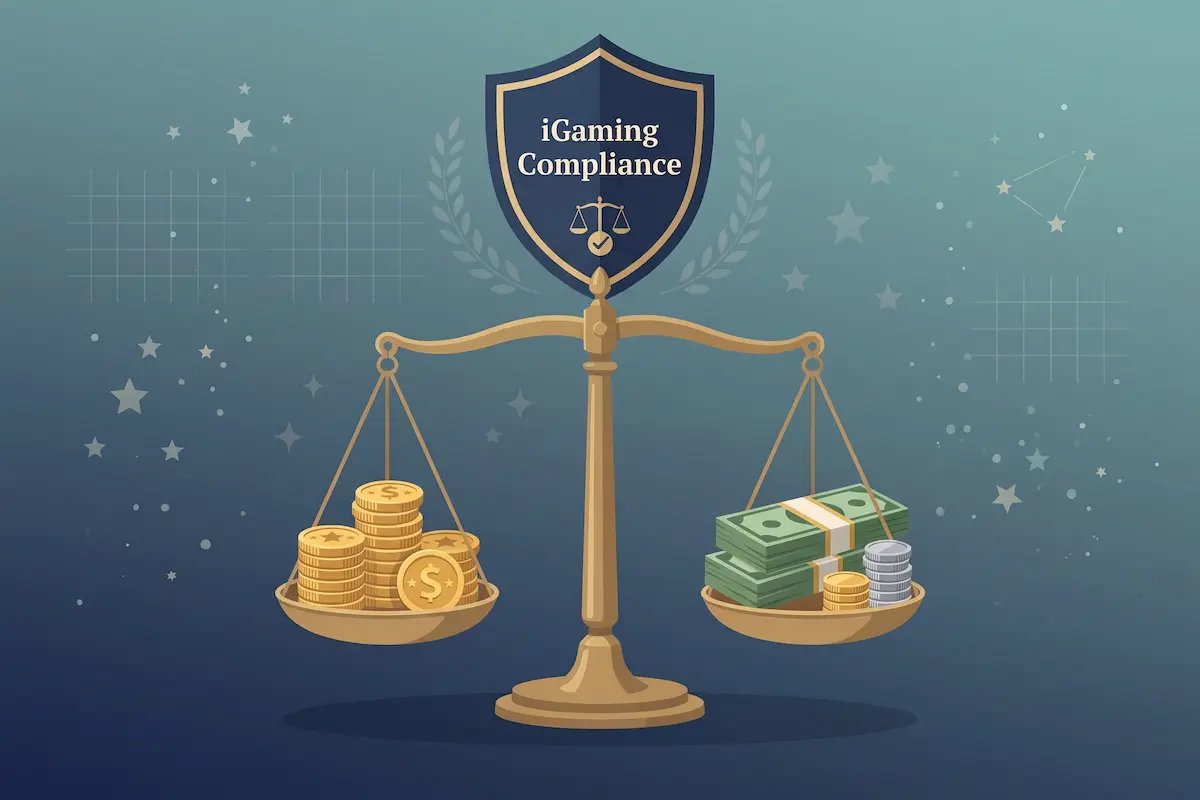
Sweepstakes vs Real Money: Compliance Differences and Wording Challenges
Mentioning Dollars and Euros: The Compliance Mortal Sin of Sweepstakes Operators
A few weeks ago, I was having coffee with a friend based in Malta. She has worked for years in the real-money iGaming industry and was starting to study the sweepstakes market.
She asked a very interesting question: “What would be the first thing you would explain to someone with real-money iGaming experience who is now learning about the American sweepstakes market?”
Well, apart from the basic concept that users must be granted an alternative method of entry—i.e., in practice, allowing them a chance to play for free—there is one key word that summarizes the difference between sweepstakes and real-money iGaming casinos: compliance.
The Wording Challenge: Forbidden Words and Eternal Vigilance at Sweepstakes Casinos
Essentially, it’s completely forbidden to mention real-money currencies such as dollars or euros.
Why? This derives from the usual legal opinions that sustain the sweepstakes market as a viable gray operation in America and elsewhere.
These legal understandings allow operators to market the product as something that is not legally an online casino and, therefore, does not require a traditional gaming license.
Special taxation and licensing have been discussed very frequently since the market’s inception.
So the first thing my real-money exec friends should know is that sweepstakes operators and platforms work hard to stay compliant.
Operators and platforms have an internal dictionary of what can and cannot be said on sweepstakes pages.
There should be no currency symbols whatsoever—like $, €, or £.
Although it might sound counterintuitive, these mistakes happen frequently and must be dealt with. But why is that the case?
How can the € Symbol Appear in an American Operator Involuntarily?
Well, a large portion of the GSPs serving American sweepstakes casinos are European, and the games converted to the sweepstakes market use special virtual token currencies to avoid mentioning real money.
Typical examples are FC and SC. The GSP and the operator then assign an internally-pegged value against real currency for invoicing purposes, but the game, is, technically, not displaying real-money references.
So any reference to the native currency of the game, whether it is EUR, GBP, or USD, must be removed completely.
Bugs, however, do happen, especially within the environment of complex operations like Game Providers.
The coding is no joke, especially when you consider the number of interconnected parties: aggregators, operators, and certification laboratories.
So staying compliant is extremely important for sweepstakes operators.
Legal Risks for Sweepstakes Operators:
America VS Real-Money iGaming in EuropeIt is also important to bear in mind that the U.S. is a very different legal environment, and U.S. state jurisdictions are much more prone to litigation than most European countries, including governing bodies and legal entities like prosecutors’ offices and state attorneys general.
One small mistake can shut an operation down or result in enormous legal fees.
That said, the American sweepstakes market surely isn’t for the faint of heart.
-
Welcome to SweepTimes.com
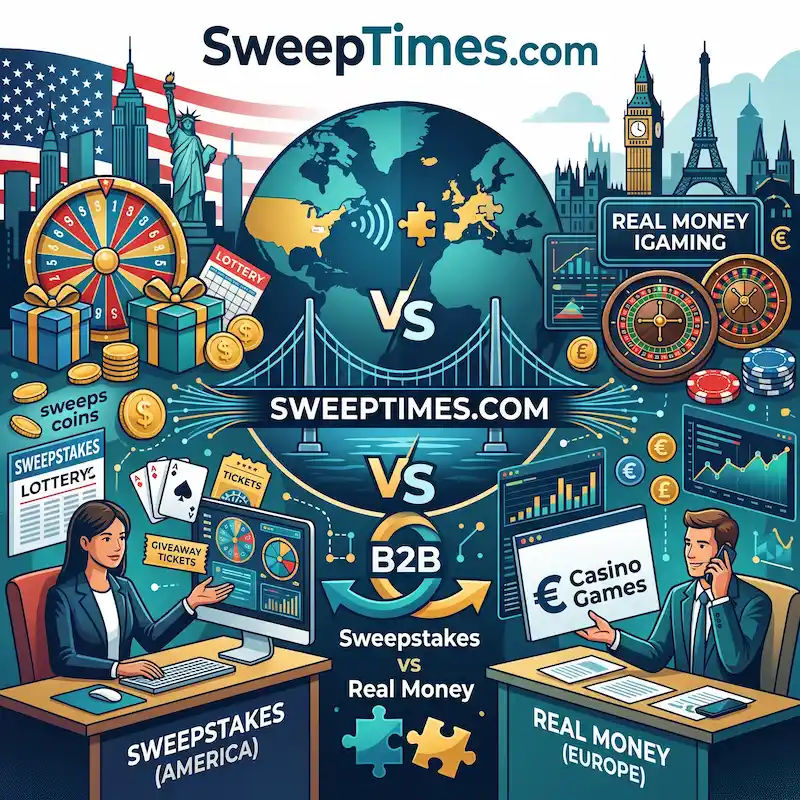
Sweepstakes in America And The Real Money iGaming Community: B2B Similarities and Confusion
Welcome to Sweeptimes.com! After more than 3 years working with sweepstakes gambling, it was only natural to share something with my friends from the international iGaming community.
The most interesting thing about this time was discovering how niche our industry progressively becomes over time. New verticals create entirely new spin-off markets, as well as industry events, products and new teams formed globally.
It’s been a long time since it was just sports betting, basic online casinos, online poker and other traditional verticals.
But the industry isn’t just about convergences: sometimes leaders in our industry find impressive examples of how distant some B2B realities can be.
Not so long ago, when I was working at a sweepstakes platform, I had a call with someone from Europe, who was pitching the games of a studio.
I mentioned exactly what we did, what the Geo was, and incredibly, the business development manager somehow conveyed that they perfectly understood what we did, and that their games were ready to be integrated into a sweepstakes platform!
It was only when I received their deck that I understood that in spite of being very approachable, our chat had been just a pleasant conversation. The deck was absolutely about Real Money iGaming, with zero conversion in their portfolio.
That was a very illuminating conversation to me, as I understood how even senior business development managers, present in all the big industry events in Europe, sometimes are completely oblivious to basic product concepts of the sweepstakes market, in America and beyond.
After having worked with the American market for 3 years, and almost 19 years of career experience in markets as diverse as the UK, Brazil, LATAM, Spain and Italy, as an executive, Senior Content Writer and Consultant, I aim for Sweeptimes.com to be both a quality daily update for those focused on the sweepstakes market in America, as well as a cultural bridge to bring insights to colleagues native to the real money gaming market.
We’ll also analyze fresh and upcoming verticals like prediction markets and how they intersect with the fascinating sweepstakes gaming market.
Welcome to Sweeptimes.com!
Lucas Pasa Mondelo
Editor-in-Chief and CEOContact: lucas@mondelo.net
DM at LinkedIn: https://www.linkedin.com/in/lucas-pasa-mondelo/