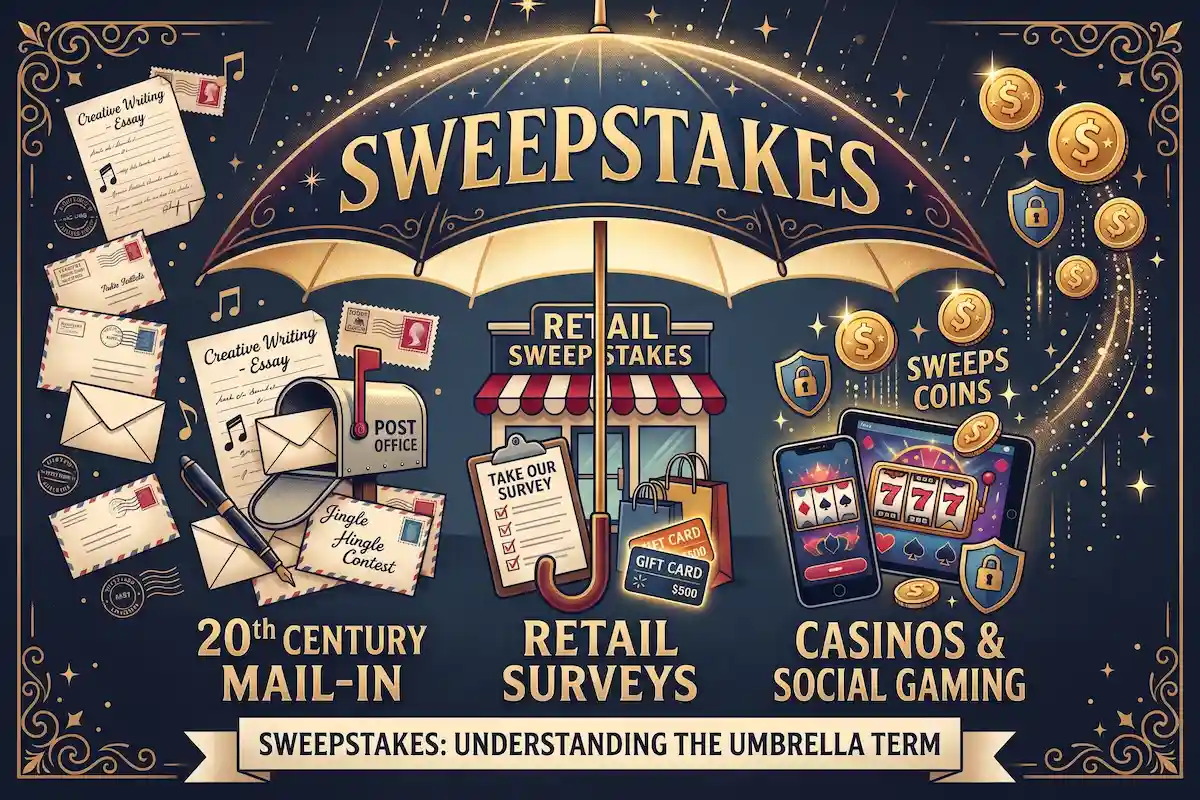
Sweepstakes is not a new term. Unlike ‘Prediction Markets’ which can be considered a new element of the gaming industry jargon, the term has been around for a while in English languages. And the U.S. is by no means an exception.
An Example of A Sweepstake Completely Unrelated To The Gambling Industry
Two giants of the retail world in America are famous for their sweepstakes. Walmart and The Home Depot run quarterly sweepstakes to assess the quality of their services.
Winners can earn gift cards worth anywhere from three to four figures.
While I have a friend who is a customer service specialist who says that “no survey should be incentivized with money at the risk of biasing results,” whether these retail giants do it to please their customers or actually try to collect intel, these sweepstakes aren’t at all comparable to a sweepstakes casino.
Creative Writing Sweepstakes in The 20th Century in America
In the 20th century, America lived the golden age of ‘Creative Writing Sweepstakes’. That stemmed from evolving laws that, at the time, didn’t allow retailers or other companies promoting goods and services to present the sweepstakes as games of chance.
Requiring some sort of creative work—such as essays, poems, jingles, songs, drawings, and other forms of artistic expression—allowed retailers to remain compliant.
Interestingly, the law eventually changed, allowing retailers to run promotions based on a key component of the sweepstakes world: an Alternate Method of Entry (AMOE), which in today’s sweepstakes casinos translates most commonly as “freebies” given to users.
A Term That Changed Heavily
The abundance of sweepstakes in different formats in 20th-century America gave birth to a subculture of ‘sweepers’. Reality was extremely different back then, and a tangible “entry cost” was mailing the entry in the case of creative writing or mail-in contests.
Going to the post office and buying stamps to actually use them is something that most people born in the 21st century can’t even imagine, but back in the 20th century, entering multiple contests could become pricey depending on the volume of entries submitted.
Sweepstakes casinos, however, still allow this practice. But unlike the 20th century, compliance is the key and not the ‘main stage’, as the sweepers receive coins for free to enjoy the social casino experience, and not like the 20th century when they mailed a jingle for example trying to win a contest.
Sweepstakes casinos surely derived from one of the most fascinating legal evolutions of gaming regulation in world history.
Leave a Reply